
JOURNAL 3710
Organic Communications
Year: 2025 Issue: 4 October-December
p.208 - 249
Viewed 356 times.
-
Bhushan B. Popatkar

-
Shweta Tiwari
-
Satish Manjare
-
Ramchandra Thorat
-
Vikas Borge
GRAPHICAL ABSTRACT
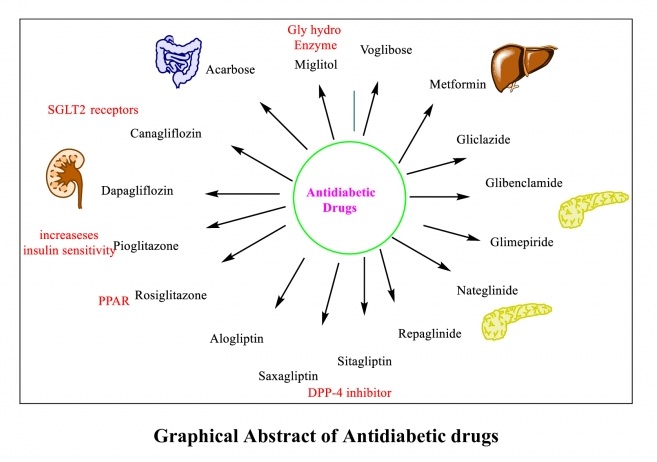
ABSTRACT
One of the most common chronic illnesses and a major cause of death in recent years is diabetes mellitus (DM). As a result, strategies for identifying, stopping, or delaying this illness and its co-morbidities have long been debated. Patients with diabetes mellitus (DM), especially those with type 2 DM, are now recommended to modify their diet and exercise routines and to gradually go from monotherapy, dual therapy, and multi-agent therapy to insulin delivery as the disease progresses. While there have been advancements, the search for the "ideal" diabetes medication is currently ongoing. There is still much disagreement on the molecular pathways that regulate DM. Since each drug has different risks, drawbacks, side effects, and modes of action, selecting the best course of treatment requires careful consideration. In this article, many classes of anti-diabetic medications were reviewed that are on the market, their uses, and their modes of action. This study will focus especially on the more recent and/or commonly prescribed classes. Since these medications influence the pathways in various cellular systems and organs, encouraging metabolic modifications responsible for either favorable or detrimental consequences, special attention will be paid to how they affect cellular metabolism. It is imperative to thoroughly examine this essential attribute before recommending an antidiabetic. The most common kind of diabetes is type-2, and oral anti-diabetic medications are essential for managing it. Sulfonylureas, thiazolidinediones, meglitinides, sodium glucose co-transporter (SGLT2), a-glucosidase inhibitors, dipeptidyl peptidase-(IV) inhibitors, and biguanides are some of the classes of oral anti-diabetic medications that are marketed today. To avert a possible public emergency, the scientific community has been working hard to create better and more sustainable synthetic methodologies towards these anti-diabetics as the burden of type-2 diabetes continues to rise. The several documented synthetic approaches for anti-diabetic medications in the aforementioned classes are summarized in this article. We hope that this compilation will provide organic and medicinal chemists
KEYWORDS- Diabetes mellitus
- antidiabetic drugs classification
- type-2 diabetes
- multistep synthesis
- mechanism of action
- medicinal Chemistry
