
JOURNAL 3658
Records of Natural Products
Year: 2026 Issue: 4
p.1 - 1
Viewed 309 times.
-
Mehmet Fatih Seyhan

-
Allison Pinar Eronat
-
Ayça Diren
-
Mete Bora Tüzüner
-
Ayşe Begüm Ceviz
-
Hülya Yilmaz-aydogan
-
Tulin Ozturk
-
Oguz Ozturk
GRAPHICAL ABSTRACT
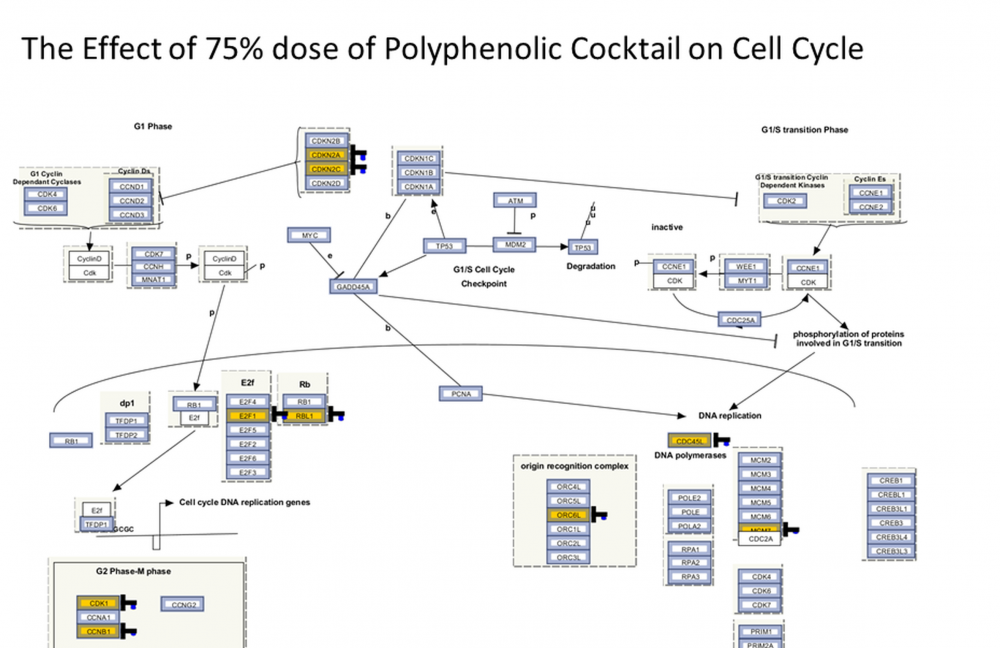
ABSTRACT
Polyphenols are abundantly available through diet and show great promise with their safe use against cancer. In our previous studies, we have shown cytotoxic effects of more than 30 polyphenols in breast cancer. In this study, we have aimed to investigate the effects of various polyphenols upon MCF-7 breast cancer and MCF-10A normal epithelial cells. To this end, we have designed a polyphenolic mixture based on the most effective concentrations of seven compounds, which is a first according to literature in terms of polyphenolic combination studies. Cell proliferation experiments were executed utilizing WST-1 and apoptotic status by Annexin V-PI. After determining most effective concentrations, we operated whole genome microarray analysis. Based on microarray data, the best effective concentration for both cell lines is 75% of polyphenolic mixture. In MCF-7 cell line, this dosage induced in down regulation of cell cycle, cell division, DNA repair and some genes linked to breast cancer. In contrast, no remarkable effect was observed in MCF-10A cell line. The designed polyphenolic mixture was demonstrated to inhibit breast cell division in multiple pathways. Our findings on cell division in MCF-7 cell line were found similarly with the study based on polyphenol-rich propolis which inhibited cell division remarkably in SK-BR-3 cells. This mixture, which is shown to have highly effective anticarcinogenic effects, can be considered as a prototype of natural prescription design for our future research.
KEYWORDS- Polyphenols
- breast cancer
- whole genome expression
- cell proliferation
- cell division
- microarray
