
Records of Agricultural and Food Chemistry
Year: 2025 Volume: 5 Issue:2 July-December
1) A Comprehensive Review on the Chemical Composition and Biological Activity of Pleurospermum angelicoides (DC.) Benth. ex C.B. Clarke
 ,
Balam Singh Bisht
and
Rakesh Kumar Joshi
,
Balam Singh Bisht
and
Rakesh Kumar Joshi

Pleurospermum angelicoides, a perennial Apiaceae herb native to the high-altitude Himalayan region, has long been valued in traditional medicine for treating ailments such as fever, typhoid, and dysentery. Despite this ethnomedicinal relevance, comprehensive scientific syntheses on its phytochemistry and pharmacology remain limited. This review addresses this gap by systematically compiling and analysing literature on the species’ distribution, morphology, traditional uses, phytochemical diversity, and biological activities. Sources were identified through targeted searches of peer-reviewed journals, ethnobotanical records, and phytochemical databases. The available evidence highlights a remarkable spectrum of bioactive constituents, including coumarins, phenylpropanoids (e.g., nothoapiole, α-asarone), and terpenoids (p-cymene, camphene), with notable variations in essential oil profiles across plant parts and geographic locations. Pharmacological studies confirm antimicrobial and antioxidant activities, validating several traditional claims and underscoring the therapeutic promise of its extracts and essential oils. These findings suggest that P. angelicoides could serve as a natural source of lead compounds for novel drug development. In addition to summarising current knowledge, this review emphasises critical research gaps, particularly regarding molecular mechanisms, pharmacodynamics, and clinical validation. Unlike earlier scattered reports, it provides the first integrative account of the species’ phytochemical and pharmacological potential, thereby establishing a foundation for its broader application in modern herbal medicine and pharmaceutical innovation.
DOI http://doi.org/10.25135/rfac.36.2508.3627 Keywords Pleurospermum angelicoides food preservation ethnomedicine phytochemistry antimicrobial activity antioxidant potential DETAILS PDF OF ARTICLE © 2025 ACG Publications. All rights reserved.2) Effect of Storage Period and Variety on the Phytochemical Properties of Stored Cocoyam-Based Products
,
Gregory I. Onwuka
,
Chinasa Okorie-Humphrey
and
Theophilus Chikodi Odom

The effects of storage life and variety on the phytochemical properties of stored cocoyam-based products were studied. A-5 kg of corms was sorted, cleaned, and cooked for three hours. After cooling down, they were peeled and sliced with a sharp kitchen knife into tiny pieces, measuring an average of 2.0 by 1.5 cm. The sample was dried in the oven at 55 °C for 6 hours and milled using a mechanical blender. A-300 grams of cocoyam leaves were harvested, sorted, cleaned, and the sample was dried in the oven at 55 °C for 6 hours and milled using a mechanical blender. The samples were kept apart in plastic containers for 0, 1, 2, and 3 months. With SPSS version 23, the collected data were statistically examined. Fisher's Least Significant Differences was used to separate the means at p ≤ 0.05. After three months in storage, the following were the phytochemical characteristics of achicha (mg/100g): alkaloid (1.24, 1.19, 1.38); tannin (0.67, 0.71, 0.75); saponin (1.27, 1.35, 1.43); flavonoid (0.39, 0.34, 0.46); polyphenol (1.27, 1.25, 1.31); oxalate (2.56, 2.27, 2.67); and phytates (1.66, 1.42, 1.46) for edeofe, cocoindia, and anampu, respectively. After three months of storage, the phytochemical characteristics of mpoto (mg/100g) were as follows: alkaloid (1.62, 1.52, 1.72); tannin (1.74, 2.17, 1.91); saponin (1.72, 1.79, 1.67); flavonoid (0.60, 0.74, 0.66); polyphenol (1.48, 1.53, 1.38); oxalate (1.66, 1.60, 1.49); and phytates (1.75, 1.71, 1.63) for edeofe, cocoindia, and anampu, separately. The cocoyam corms and leaves may be helpful in food preparation and the treatment of certain chronic diseases, given the significant concentrations of health-promoting phytochemicals found in processed cocoyam achicha and mpoto samples
DOI http://doi.org/10.25135/rfac.39.2510.3701 Keywords Achicha mpoto alkaloid tannin polyphenol DETAILS PDF OF ARTICLE © 2025 ACG Publications. All rights reserved.3) From Phenolics to Function: Anti-Diabetic Potentials of Hawthorn, Pomegranate, and Jujube Vinegars
,
Çağlayan Ünsal Gürer
,
Ismail Yener
,
Mehmet Akdeniz
,
Serkan Yigitkan
,
Mustafa Abdullah Yılmaz
,
Suzan Tireki
,
Abdulselam Ertaş
and
Aslı Barla Demirkoz
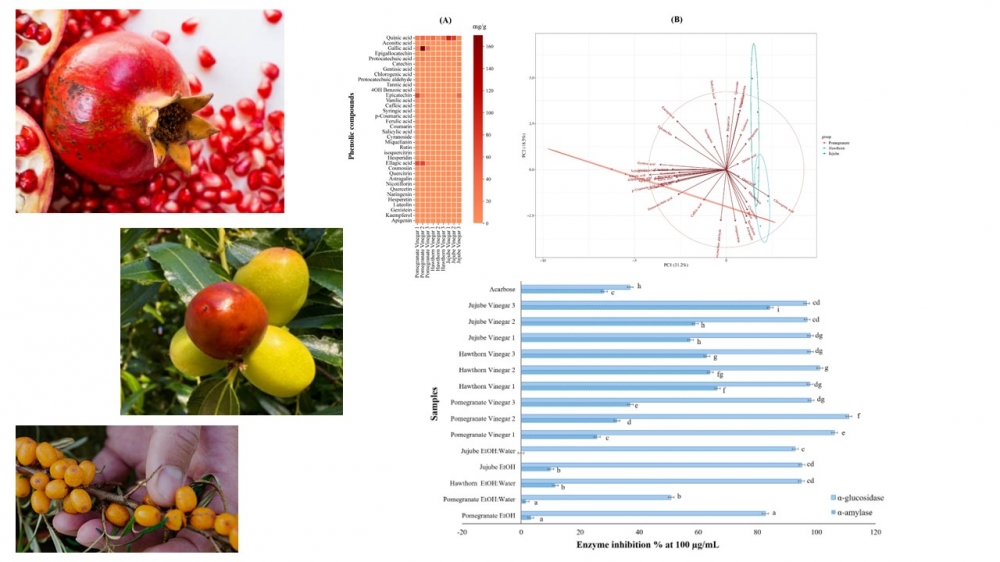
This study aimed to compare the phenolic profile and antidiabetic activities of extracts and vinegars of pomegranate, hawthorn, and jujube. Extracts and vinegars of plants were evaluated by LC–MS/MS for their individual phenolic profiles. Antidiabetic potential was assessed in vitro by measuring α-amylase and α-glucosidase inhibition with acarbose as a positive control. Results showed unique phenolic profiles: pomegranate extracts and vinegar (especially pomegranate vinegar 2) were enriched in ellagic acid (68.76 mg/g) derivatives; hawthorn 70% ethanolic extract in quinic acid (89.355 mg/g) and hawthorn vinegar 1 in quinic acid (35.899 mg/g) and flavonol glycosides; and jujube ethanolic extract in quinic acid (77.803 mg/g), jujube vinegar 1 in quinic acid (101.568 mg/g) and protocatechuic derivatives. Vinegar fermentation enhanced phenolic recovery, resulting in higher levels of bioactive compounds compared to extracts, and it improved the recovery of phenolics, as the amounts of bioactive compounds were higher in vinegars than in extracts. Both pomegranate and hawthorn vinegar 2 exerted the highest α-glucosidase inhibitions (110.97±3.01 and 101.08±1.71). Jujube vinegars (especially jujube vinegar 1) showed complementary features with greater enzyme inhibitions (97.96±1.27) along with previously reported insulin-sensitivity properties. This is the first study to provide a comparative evaluation of phenolic composition and antidiabetic potential of pomegranate, hawthorn, and jujube vinegars.
DOI http://doi.org/10.25135/rfac.38.2510.3655 Keywords Pomegranate hawthorn jujube vinegars phenolic enzym Inhibition DETAILS PDF OF ARTICLE © 2025 ACG Publications. All rights reserved.4) Role of Soil and Environmental Factors in Predicting Physical and Mechanical Properties of Black Alder Wood: CCA Aided MLR Modeling Approach
,
Ergün Kahveci
and
İrfan Öztürk

This study aimed to determine and model the relationships between some physical and mechanical properties of wood and physical and chemical properties of the soil, soil nutrient cations, and environmental factors in Alnus glutinosa subsp. barbata stands naturally growing in the Artvin region. Canonical Correlation Analysis (CCA) was employed to identify the relationships between the dependent and independent variables. Stepwise Multiple Linear Regression (MLR) Analysis was used to model the physical and mechanical properties. According to the CCA analysis results, a strong relationship was determined between MOR, MOE, and OWD and chemical soil properties such as pH, Mg, and K (CCA1, r = 0.89). In addition, a significant relationship was determined between CPG and DB and moisture and topographic factors such as AWC, FC, WP, and ALT (CCA2, r = 0.52). As a result of the MLR analysis, the model created for compressive strength parallel to grain explained 55% of the variance (R² = 0.552, RMSE = 35.66); The models created for oven-dry wood density and modulus of elasticity explained 54% (R² = 0.541, RMSE = 0.0352) and 38% (R2 = 0.386, RMSE = 530.99) of the variance, respectively.
DOI http://doi.org/10.25135/rfac.35.2506.3566 Keywords Artvin CCA MLR nutrient soil properties DETAILS PDF OF ARTICLE © 2025 ACG Publications. All rights reserved.5) Comparative Evaluation of Antioxidant and Enzyme Inhibitory Activities of Pomegranate Vinegars and Extracts
,
Çağlayan Ünsal Gürer
,
Ismail Yener
,
Mehmet Akdeniz
,
Serkan Yigitkan
,
Mustafa Abdullah Yılmaz
,
Suzan Tireki
,
Abdulselam Ertaş
and
Aslı Barla Demirkoz
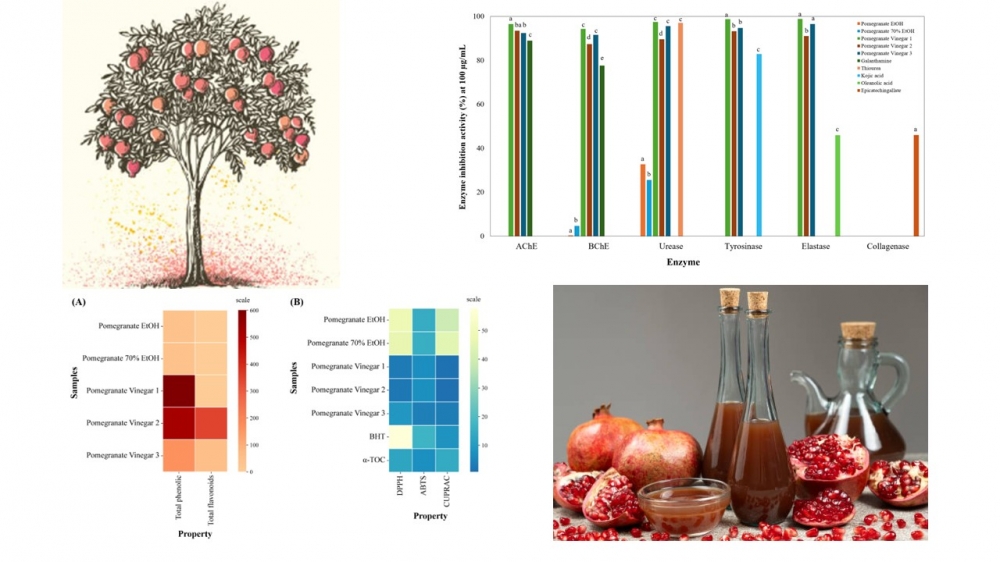
In this study, antioxidant potential and enzyme inhibitory activities of pomegranate vinegars and extracts were investigated. Antioxidant activity was evaluated using ABTS, DPPH, and CUPRAC assays. Total phenol and flavonoid contents were also determined spectrophotometrically. The enzyme inhibition analysis comprised the assessment of anticholinesterase, anti-urease, and anti-aging (tyrosinase, elastase, and collagenase) targets. Pomegranate vinegars showed significantly higher total phenolic and total flavonoid contents with respect to crude extracts. The antioxidant activity of vinegar samples was higher, and one of the investigated vinegars (vinegar 2) exerted the highest radical-scavenging ability (DPPH IC₅₀: 2.21±0.01 μg/mL). Enzyme inhibition assays demonstrated that vinegars showed a broad-spectrum activity against several targets. The maximum anticholinesterase activity (AChE: 96.53±1.47%; BChE: 94.35±0.74%) was observed by one of the vinegars (vinegar 1), exceeding that of galantamine. Another vinegar sample (vinegar 3) had remarkable elastase (96.57±1.80%) and collagenase inhibition. All vinegars exhibited potent inhibitory activity against α-glucosidase (up to 110.97±3.01%), significantly higher than acarbose. On the other hand, ethanolic extracts displayed weak or no inhibitory activities. Fermentation markedly improved the phenolic profile and multifunctional bioactivities of pomegranate products, providing vinegars with potent antioxidant, neuroprotective, anti-aging, and anti-urease activities. These results reveal pomegranate vinegar as a new functional food candidate with potent nutraceutical activities.
DOI http://doi.org/10.25135/rfac.37.2510.3654 Keywords Punica granatum pomegranate vinegar antioxidant capacity enzyme inhibitory activity DETAILS PDF OF ARTICLE © 2025 ACG Publications. All rights reserved.6) Chemical Composition and Biological Activity of Lomelosia rotata (M.Bieb.) Greuter & Burdet
,
Gülsen Şimşek Gülhan
and
Ahmet Aksoy
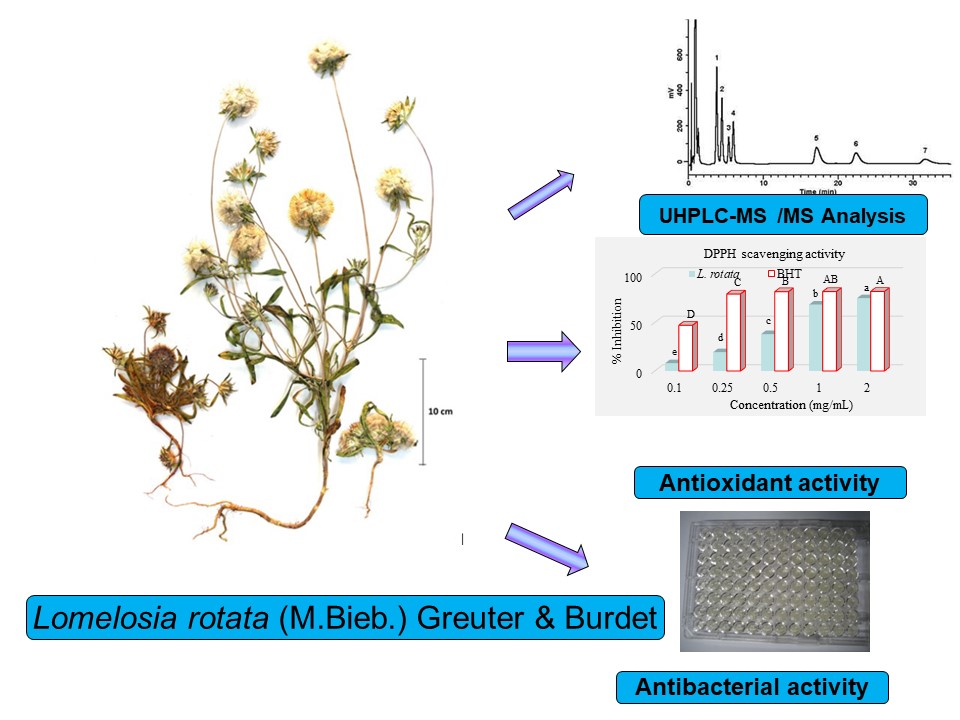
This study aimed to determine the phenolic compositions and biological activities of Lomelosia rotata (M.Bieb.) Greuter & Burdet (Caprifoliaceae). According to HPLC/MS-MS analysis results, quinic acid (253.058 mg/g) was detected as the primary component in L. rotata methanol extract. The total phenolic and total flavonoid contents of the extract were examined using the Folin-Ciocalteu reagent and aluminum chloride colorimetric assays, respectively. Phosphomolybdenum, 2,2-diphenyl-1-picrylhydrazyl radical-scavenging (DPPH), ferric-ion-reducing power (FRAP), and cupric-ion-reducing antioxidant activity (CUPRAC) methods were used to evaluate the antioxidant capacity. L. rotata methanolic extract showed an effective DPPH scavenging activity (IC50 = 23.30 μg/mL). Results showed that the extract had moderate reducing activity toward cupric and ferric ions. The methanol extract showed no antibacterial effect. Our study suggests that L. rotata extract has potential use as a natural antioxidant for food preservation and human health.
DOI http://doi.org/10.25135/rfac.40.2511.3722 Keywords Lomelosia rotata antibacterial activity antioxidant activity phenolics DETAILS PDF OF ARTICLE © 2025 ACG Publications. All rights reserved.7) Investigation of In Vitro Anti-diabetic Activity and Phenolic Component Profile of Mulberry Leaf Tinctures

This study aimed to evaluate the in vitro anti-diabetic potential and phenolic compound profile of leaf tinctures prepared from fresh and dried leaves of three mulberry species (Morus alba L., Morus rubra L., and Morus nigra L.) using different plant-to-solvent ratios, with the objective of identifying the most effective formulation for Type II diabetes. For this purpose, ethanol:water (70:30, v/v) tinctures were prepared at 1:4, 1:5, 1:6, 1:7, and 1:8 (w/v) ratios, and their inhibitory activities against α-amylase and α-glucosidase enzymes were determined by a spectrophotometric method. Among all tested samples, the dried M. rubra L. leaf tincture prepared at a 1:6 ratio (TMrD 1:6) exhibited the strongest inhibitory activity, with IC₅₀ values of 24.11 μg/mL for α-amylase and 40.18 μg/mL for α-glucosidase. The phenolic compound profile of the most active tinctures was further investigated using high-performance liquid chromatography coupled with diode-array detection (HPLC-DAD) through the screening of 42 phenolic compounds. Protocatechuic acid, p-hydroxybenzoic acid, caffeic acid, and chlorogenic acid were quantitatively detected, whereas p-coumaric acid, ferulic acid, coumarin, and trans-cinnamic acid were present only in trace amounts. Overall, the dried M. rubra L. leaf tincture (TMrD 1:6) demonstrated promising potential as a phytopharmaceutical candidate for diabetes management.
DOI http://doi.org/10.25135/rfac.41.2511.3728 Keywords Morus alba L. Morus rubra L. Morus nigra L. chemical profile anti-diyabetic activity tincture DETAILS PDF OF ARTICLE © 2025 ACG Publications. All rights reserved.8) Nutrient Composition and Techno-functional Properties of Three Nigerian Spices and Sensory Acceptability of Traditional Dishes
,
Clara O. Ogbedeagu
and
Chinwe Nwachukwu
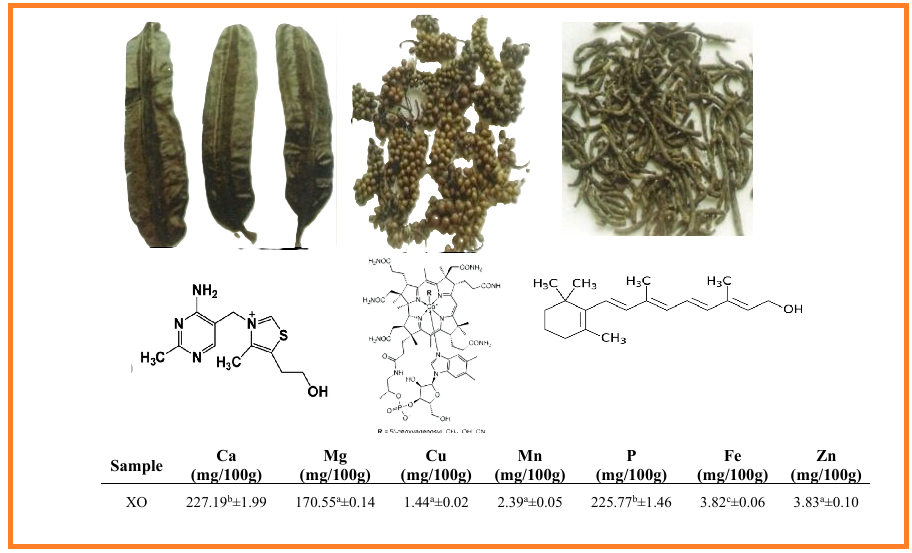
This study evaluated the functional and micronutrients in Piper guineense (uziza), Xylopia aethiopica (Guinea pepper) and Tetrapleura tetraptera (Aidan fruit) spices and also assessed the level of acceptability of the dishes prepared using these spices. The spices were processed before determining the functional, vitamin, mineral and sensory properties. The results show that the oil absorption capacity, foam and gelation capacities of the samples ranged from 1.94 – 2.39%, 13.56 – 10.78 g/mL and 8.45 – 6.00 g/mL respectively. Piper guineense was significantly higher in water absorption capacity (2.27%), bulk density (0.52 mg/100g) and swelling index (1.87 g/mL) while the least values were recorded in Tetrapleura tetraptera for water absorption capacity (2.14 g/mL) and swelling index (1.31 g/mL). Gelatinization temperature ranged between 58.73oC (Tetrapleura tetraptera) and 62.45oC (Xylopia aethiopica). Piper guineense was higher in Calcium (283.72 mg/100g), Phosphorus (249.96 mg/100g) and Iron (6.34 mg/100g). Tetrapleura tetraptera had the lowest values for Calcium (189.01 mg/100g), Magnesium (144.90 mg/100g), Copper (0.13 mg/100g), Manganese (0.84 mg/100g), Phosphorus (196.49 mg/100g) and Zinc (1.27 mg/100g), while sample Xylopia aethiopica had the least value for Fe (3.82 mg/100g) and higher values for Magnesium (170.55 mg/100g), Copper (1.44 mg/100g), Manganese (2.39 mg/100g) and Zinc (3.83 mg/100g). The vitamin B1 content of the samples ranged from 0.02 (Piper guineense) – 0.03 (Xylopia aethiopica and Tetrapleura tetraptera) mg/100g. The vitamin B2 content of samples ranged from 0.02 – 0.03 mg/100g. The vitamin B12 content of the samples ranged from 0.28 (Piper guineense) – 0.33 (Xylopia aethiopica) mg/100g. The vitamin C content of Piper guineense (1.84 mg/100g) was higher than other samples. The vitamins A and E contents ranged from 8.27 – 9.58 µg/100g and 0.85 – 1.72 mg/100g respectively. Tetrapleura tetraptera was highest while Xylopia aethiopica was the lowest. There were variations in the sensory score of the dishes prepared with theses spices.
DOI http://doi.org/10.25135/rfac.42.2511.3740 Keywords Spices Piper guineense Xylopia aethiopica sensory evaluation traditional Nigerian foods DETAILS PDF OF ARTICLE © 2025 ACG Publications. All rights reserved.
9) Comparative Evaluation of Phenolic Compounds of Flowers, Leaves and Stems of Wild Hypericum perforatum L. in Türkiye
,
Keziban Kara
and
Ayşe Şahin Yağlıoğlu

The phytochemical content of medicinal and aromatic plants is important for evaluating their biological activity and pharmacological efficacy. In this study, Hypericum perforatum L. (St. John's wort), a plant that grows naturally in many regions of Türkiye, was collected from the Çankırı (Eldivan) region, and the phenolic compounds of methanol and ethyl acetate extracts from the flower, leaf, and stem parts were investigated. Phenolic compounds were identified using LC-MS/MS. All analyses were performed in triplicate, and the results were expressed as mean ± standard deviation. According to the findings, different parts of the same plant showed significant differences in phenolic compound content depending on the solvent used. In methanol extracts, quinic acid, catechin, epicatechin, and rutin were the compounds with the highest concentrations. The highest concentrations of quinic acid (12977.78 μg/g), catechin (5675.56 μg/g), epicatechin (18400 μg/g), and rutin (9244.44 μg/g) were determined in the methanol stem extract. In the study, the compound content identified in the methanol extract was higher than that in the ethyl acetate extract. However, the highest amounts of phenolic compounds were detected in the methanol stem extract among the methanol and ethyl acetate extracts. According to the LC-MS/MS results, methanolic extracts exhibited a higher phenolic compound content.
DOI http://doi.org/10.25135/rfac.43.2512.3756 Keywords Hypericum perforatum L St. Johns wort phenolic compounds LC-MS/MS Türkiye DETAILS PDF OF ARTICLE © 2025 ACG Publications. All rights reserved.